
pyShelf 0.3.0
A simple terminal based ebook server
Frustrated with Calibre being my only option for hosting my eBook collection, I have decided to spin up my own.
Calibre is a great organizational tool for your books, however not having a terminal based option for running and maintaining a server is cumbersome when running on a headless server. Calibre does have a console based server solution, However there is currently no way to create, and manage your library in a headless enviroment.
Thus I am creating pyShelf and I hope to be able to provide all the functionality required to organize and host all your ebooks.
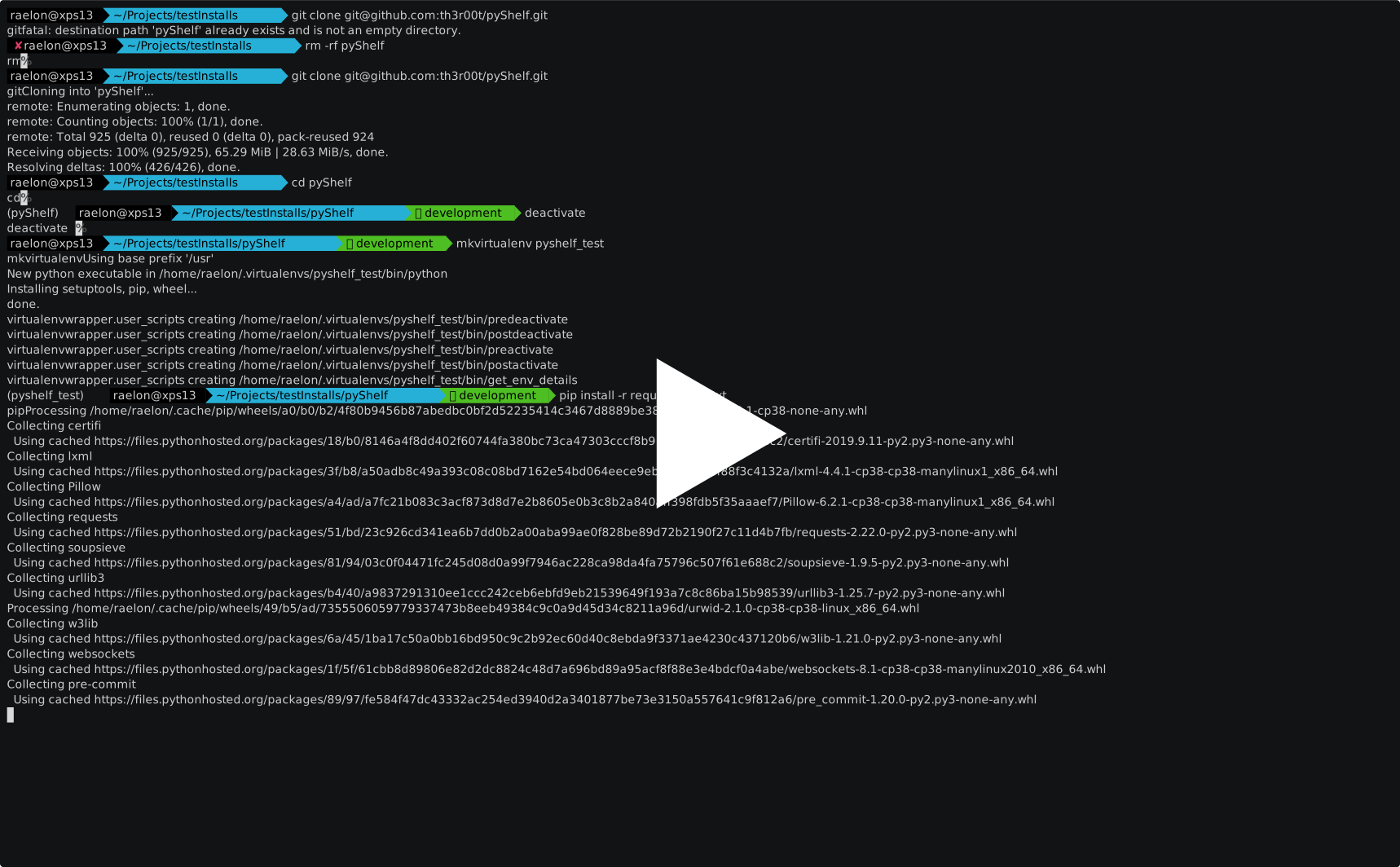
- In addition to the above steps you must now also make the requisite changes in config.json to reflect the connection to your postgresql server

I am open to and hoping for community help in the design and execution of this program.
0.3.0 Patch Notes.
"And now we search."
Just about all the changes in this release were in some way related to implementing the search features. There is one new requirement
- Requirement: PostgreSQL * This is what I believe to be the last infrastructure requirement, users with larger libraries should notice an increase in access speed.
- Feature: Searching. * The search feature is now implemented. In its current incarnation you will by default search the author, title, & file_name fields. More defined search options will be available in future releases. Searches are paginated @ 20 results per page.
- Discord https://discord.gg/H9TbNJS
- IRC find us on freenode.net @ #pyshelf
Development
-
pre-commit* Before developing, runpre-commit install. * See the documentation for more information. -
'Doxygen' * Any changes to source should be documented and have run doxygen doxygen.conf prior to commiting.
-
'sem-ver' * Before advancing version numbers be sure to set PROJECT_NUMBER in doxygen.conf accordingly.
Configuration
All pyShelf configuration is done in config.json.
- Be sure to set the path to your library, and database connection details.
Nginx configuration
I have included a default nginx config file pyshelf_nginx.conf. This file should be sufficient to get you up and running. You are required to change the location alias's to reflect your pyshelf install folder leaving everything after /frontend intact.
Further resources for nginx setup may be found @ This nginx, django, & uwsgi, guide
uwsgi configuration
Inside uwsgi.ini you should make changes to reflect your install directory, and the port you wish uwsgi to listen on. Alternativly you can make the requisite changes to listen on a socket instead. This change would also require a change to the pyshelf_nginx.conf file as well.
pyShelf configuration
User configuration is contained within config.json in the project root. The only currently required configuration is to set book_path to the location of your books.
Current Features
Currently pyShelf will recursively scan your collection, extract and store some metadata in the sqlite database. It will also provide you with a web based frontend to view and download your books. The search feature is currently in its infancy, and by default searches the author, title, & file_name fields. There is no way to change this in the program right now.
Django has been implemented to power the frontend experience, and web based database maintenance. A properly configured web server is required for hosting the frontend, and a PostgreSQL server for the database, configuration of these servers is outside of the scope of this readme.
Running via the Django test server might be possible, albeit not recomended.
In Progress
- Searching, & further organizational tools.
- Docker image for those who need it.
- Improved cover image storage, and acquisition.
Future Goals
- Support for other book formats (Currently only supporting EPUBS)
- Terminal Backend for catalogue maintenance
- Calculate page count from total characters
- (Thanks to @Fireblend for the idea) https://github.com/th3r00t/pyShelf/issues/3
- Reader for easy integration with your catalogue